Ski tips
Piste, all-mountain or powder skis? We break down the best waist width and stiffness for every level. We also explain why Japan's light snow lets you ski narrower than you might expect, and why afternoon chop on storm days still favours a wider ski.
For most people skiing in Japan, a ski with a waist of around 85–100mm is the best all-round choice. It handles groomed runs comfortably and floats well enough in Japan's light, dry powder. That said, the right width depends on your level, where you plan to ski and how much time you'll spend off the groomed runs.
Japan is known for its snow. Hokkaido resorts such as Niseko and Rusutsu regularly see well over ten metres of snowfall in a season, and fresh snow is the norm rather than the exception through January and February. That changes the equation compared with skiing in Europe or North America, and it's worth thinking about before you pack your own skis or pick up a rental pair.
This guide explains what ski width means, how it affects your skiing on and off the piste, what width and stiffness suit each level, and the quirks of Japanese snow that might surprise you.
When people talk about ski width, they usually mean the waist: the narrowest point of the ski, underfoot. It's measured in millimetres and printed on most skis as three numbers, such as 128/88/112. Those figures are the width at the tip, waist and tail.
The waist width has the biggest effect on how a ski behaves. As a rough rule:
Most skis sit somewhere between the two, and that middle ground is where many skiers in Japan end up.
The single biggest factor in choosing a width is where you'll spend your time.
On piste, the snow has been groomed flat and packed firm. Here you want a ski that grips and turns easily. Narrower skis do this best, which is why piste and race skis tend to sit between 65mm and 80mm underfoot.
Off piste, the snow is ungroomed. That might mean fresh powder, tracked-out snow or the trees between runs. A wider ski stops you sinking, keeps the tips up and makes it easier to stay balanced when the snow is deep or uneven.
Most skiers don't fit neatly into one camp. They ski groomers in the morning, duck into the trees when they spot fresh snow and finish the day back on the piste. That's what all-mountain skis are designed for. If you're thinking about heading beyond the ropes, read our guide to off-piste skiing first.
Not sure where you sit? Our ski and snowboard level guide explains each stage in more detail.
If you're new to skiing or still linking your first turns, a narrower piste ski is the easiest to learn on. It turns with very little effort, grips on firm snow and responds to small movements, which helps you build good habits early.
Beginners will spend almost all their time on groomed runs, so there's little benefit to a wider ski. A width of 70–80mm is the sweet spot. Rental shops in Japan will usually put you on something in this range.
All-mountain skis are the best fit for most skiers in Japan. They're wide enough to float in fresh snow and in the trees, but still narrow enough to carve comfortably on the piste.
Within this range:
If you're buying one pair of skis for a Japan trip and you ski confidently on red and black runs, this is the range to start with.
At the other end of the scale, strong skiers who love fast, clean turns on groomed runs also suit narrow skis. Carving-focused and race-inspired skis are often 66–75mm underfoot. The narrow waist lets you tip the ski onto a high edge quickly, and it holds that edge at speed.
These skis are brilliant on a freshly groomed morning run, but they're hard work in deep snow. If you only plan to carve, they're a great choice. If powder is part of the plan, look further down this list.
Wide skis are built for deep snow, and Japan has plenty of it. A waist of 100–120mm keeps you on top of the snow, reduces leg fatigue on long powder runs and makes tree skiing more forgiving.
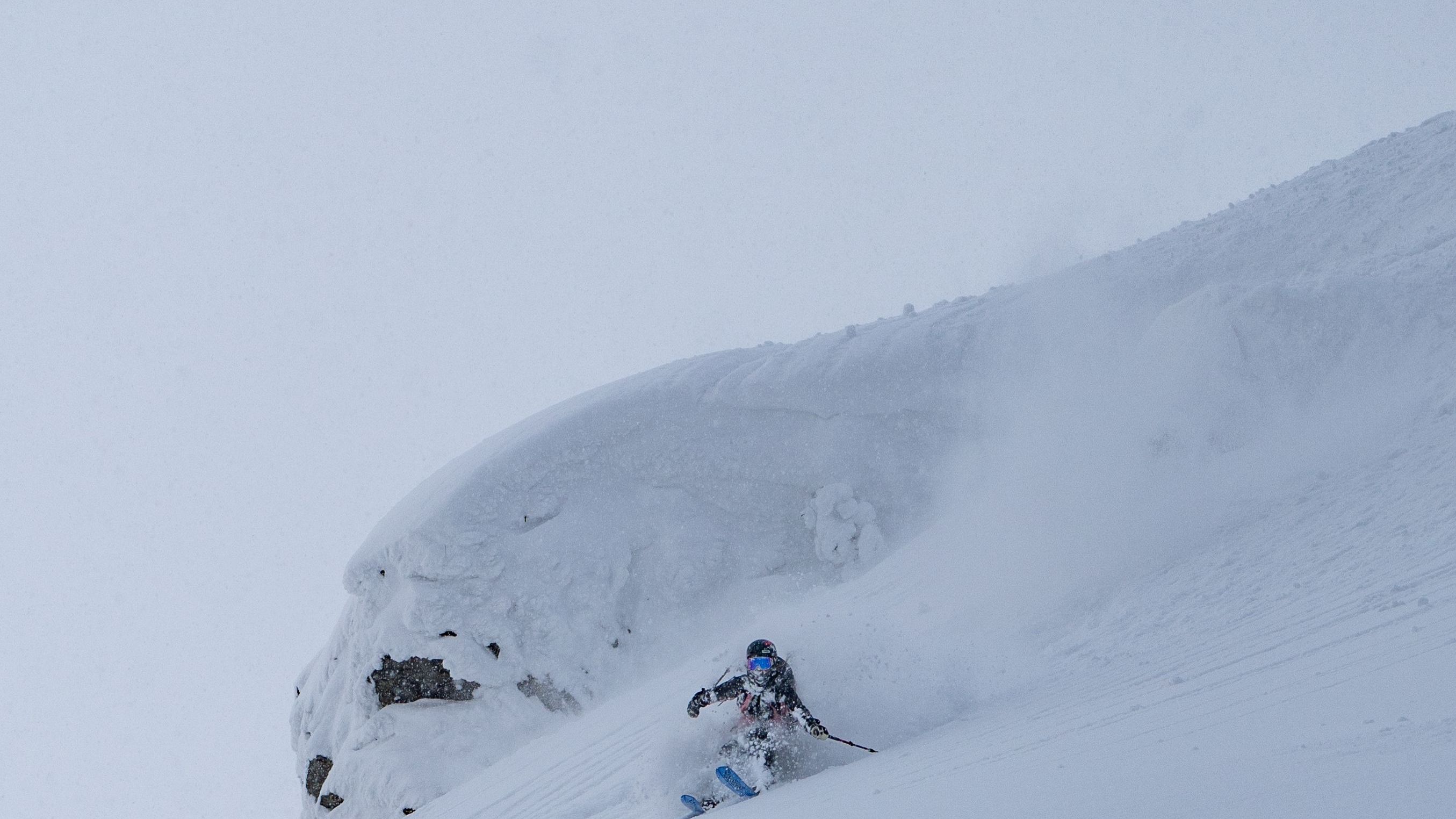
Powder skis often have rocker in the tip (and sometimes the tail). That means the ends curve up earlier, which helps the ski plane up in soft snow. They're the right tool for skiers who plan to spend most of their time in the trees, in Niseko's backcountry gates or chasing fresh snow on storm days. On a firm, icy piste they feel less precise.
Width tells you where a ski performs best. Stiffness (or flex) tells you who it suits. There are two types to think about: how easily the ski bends along its length, and how much it resists twisting across its width (torsional stiffness).
Beginners should choose a soft, forgiving ski. It bends easily at lower speeds, so it's simpler to turn and less likely to punish a mistake. A stiff ski needs speed and strong technique to work properly.
Advanced carvers benefit from a stiffer ski, especially torsionally. That stiffness keeps the edge biting on firm snow and gives stability at speed. On a soft ski, the edge chatters and loses grip as you push harder.
All-mountain skiers are best on a medium flex. It's supportive enough to carve and handle chopped-up snow, but still easy enough to pivot in the trees.
Powder skiers can go softer than you might expect, particularly in the tip. A softer tip rises through the snow rather than diving. Stronger, heavier skiers who ski fast through mixed snow may still prefer a stiffer powder ski, as it stays stable when the snow is cut up.
Your weight matters too. Heavier skiers bend a ski more easily, so a flex that feels right for one person can feel soft for another. If you're unsure, ask the rental shop to match the flex to your weight and ability.
The general advice above applies anywhere. But Japanese snow has two quirks that pull in opposite directions, and both are worth knowing.
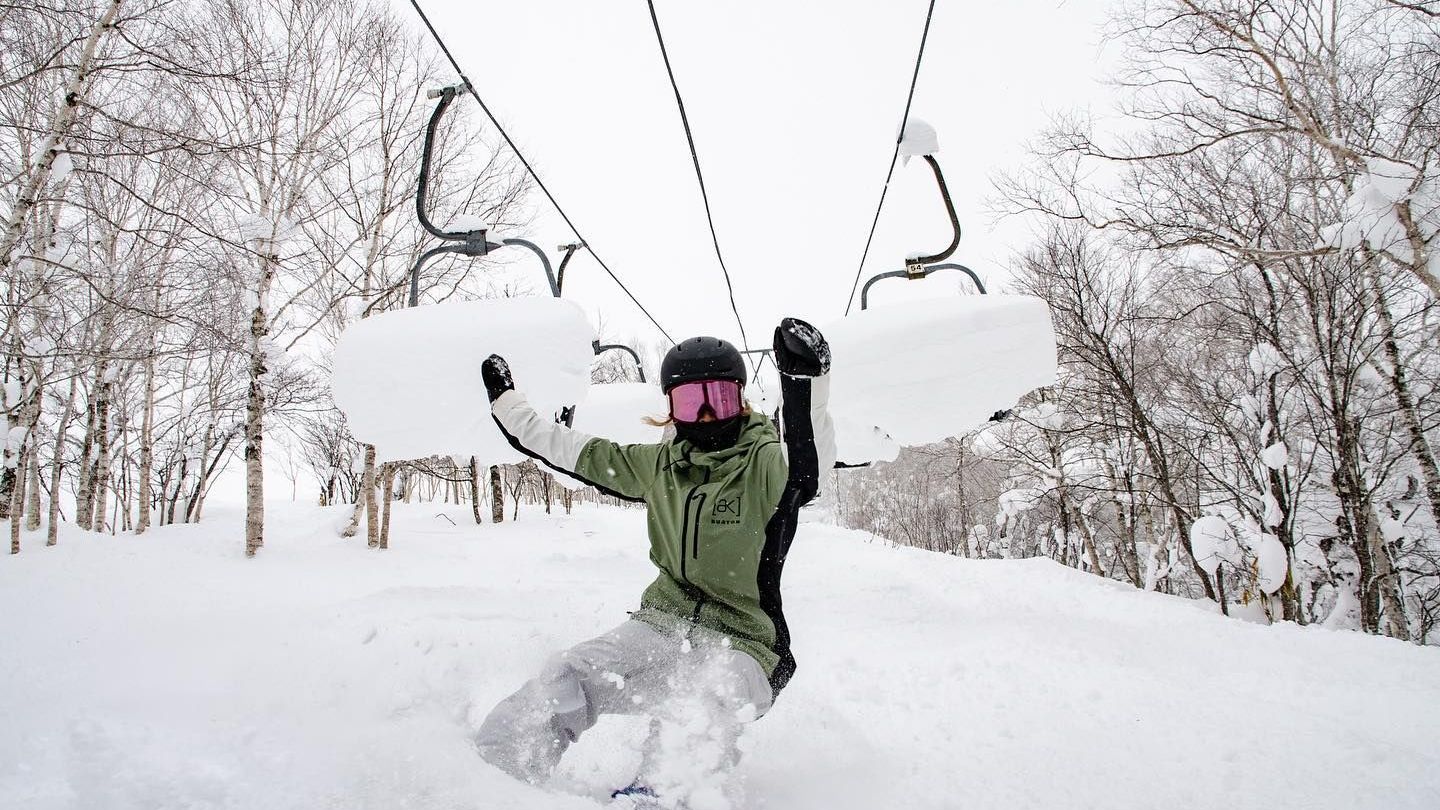
Hokkaido's snow is famously dry and light. Cold air from Siberia picks up moisture over the Sea of Japan and drops it as fine, low-density snowflakes. The result is powder so soft that you sink through it easily, but it offers very little resistance as you do.
In practice, that means a narrower ski copes better than you'd expect. In heavier, wetter snow, a narrow ski can bog down and feel like hard work. In Japanese powder, it moves through the snow smoothly and stays manageable. Many confident skiers who hop on and off the piste are perfectly happy on something around 85–95mm, even on a powder day.
The flip side is how much snow falls, and how often. On a big storm day, the groomed runs can be completely covered by fresh snow within a few hours. What started as a smooth piste in the morning becomes a mix of deep powder, skier-made piles and soft moguls by the afternoon.
That choppy, tracked-out snow is where a wider ski earns its place. Extra width and a slightly stiffer build help you ride over the lumps rather than being knocked around by them. If you plan to ski all day on a storm day, and particularly late in the day, a ski at the wider end of the all-mountain range (95–105mm) will feel more stable and less tiring.
For most visitors, the answer sits in the middle. A ski between 88mm and 100mm handles light powder, buried groomers and afternoon chop without feeling clumsy on the piste. Go narrower if you'll mostly stay on groomed runs. Go wider if you're chasing deep snow from first chair to last.
Skier type | Where you'll ski | Waist width | Stiffness |
|---|---|---|---|
Beginner | Groomed runs | 70–80mm | Soft |
Intermediate to advanced, mostly piste | Groomers with occasional powder | 85–90mm | Medium |
Intermediate to advanced, on and off piste | Groomers, trees, soft snow | 85–90mm | Medium |
Advanced, carving-focused | Groomed runs, at speed | 66–78mm | Stiff, especially torsionally |
Advanced, powder-focused | Trees, gates, storm days | 100–120mm+ | Soft to medium, softer tip |
If you're between two sizes, think about the conditions you're most likely to meet. Mid-winter storm days favour the wider option. Spring skiing, clear spells and a piste-focused trip favour the narrower one.
There's no single perfect width for Japan, but there is a sensible starting point. Beginners and dedicated carvers should stick with narrower piste skis. Powder hunters will get the most from 100mm and above. Everyone else will be well served by an all-mountain ski in the 88–100mm range.
If you're renting, it's easy to swap. Many skiers take a narrower pair for firm, clear days and switch to something wider when a storm rolls in. The conditions can change quickly in Hokkaido, and it pays to be flexible.
When you're timing your trip, our guide to the best time to ski in Japan covers how snow conditions change through the season. And if you'd like help getting the most from your skis, whether that's carving cleaner turns or finding your feet in powder, a private instructor can tailor the day to your level. Our overview of lesson types explains the options.